
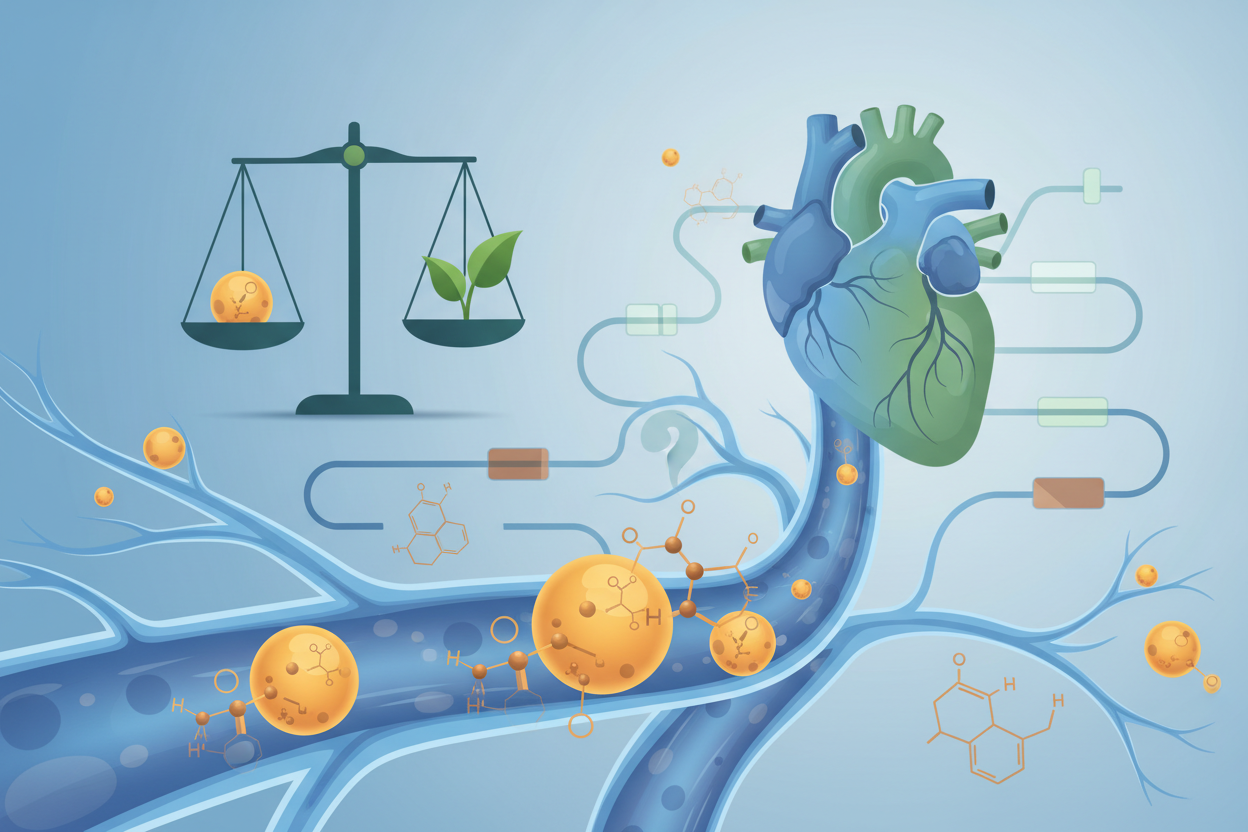
Cholesterol without prejudice: Is high LDL really the enemy?
When the term "high cholesterol" is mentioned, most people automatically think of the risk of heart attack, stroke, and prescribed statins. For decades, we have been taught a simple equation: more cholesterol = greater risk. Medical authorities, health insurance companies, the media, and pharmaceutical companies all speak with practically one voice – lower LDL at all costs. But what if this equation is not so certain? What if it is even the opposite?
This article invites you to a deeper reflection, based on data that hardly make it into mainstream discourse. And which – if taken seriously – can change our view of one of the longest-held truths in medicine.
LDL paradox: The higher the cholesterol, the longer the life?
Overview study published in the journal Annals of Epidemiology and Public Health (Ravnskov et al., 2020) analyzed 19 population studies involving more than 6.3 million people . The results were surprising:
• In 9 studies, people with higher LDL lived longer than those with lower levels.
• In the other 8, there was no relationship between LDL levels and mortality.
• Only In 2 studies, higher mortality was observed in people with low LDL .
In other words, In more than 90% of cases, higher LDL did not shorten life, but often extended it.
This data comes in sharp contrast to official recommendations. This is exactly where it arises paradox recommendation : clinical guidelines force us to reduce LDL below the threshold of 2.5 mmol/l (sometimes even below 1.8), although population studies show that such low LDL may be associated with higher mortality, especially in older individuals.
What the body needs LDL for – and why it is irreplaceable
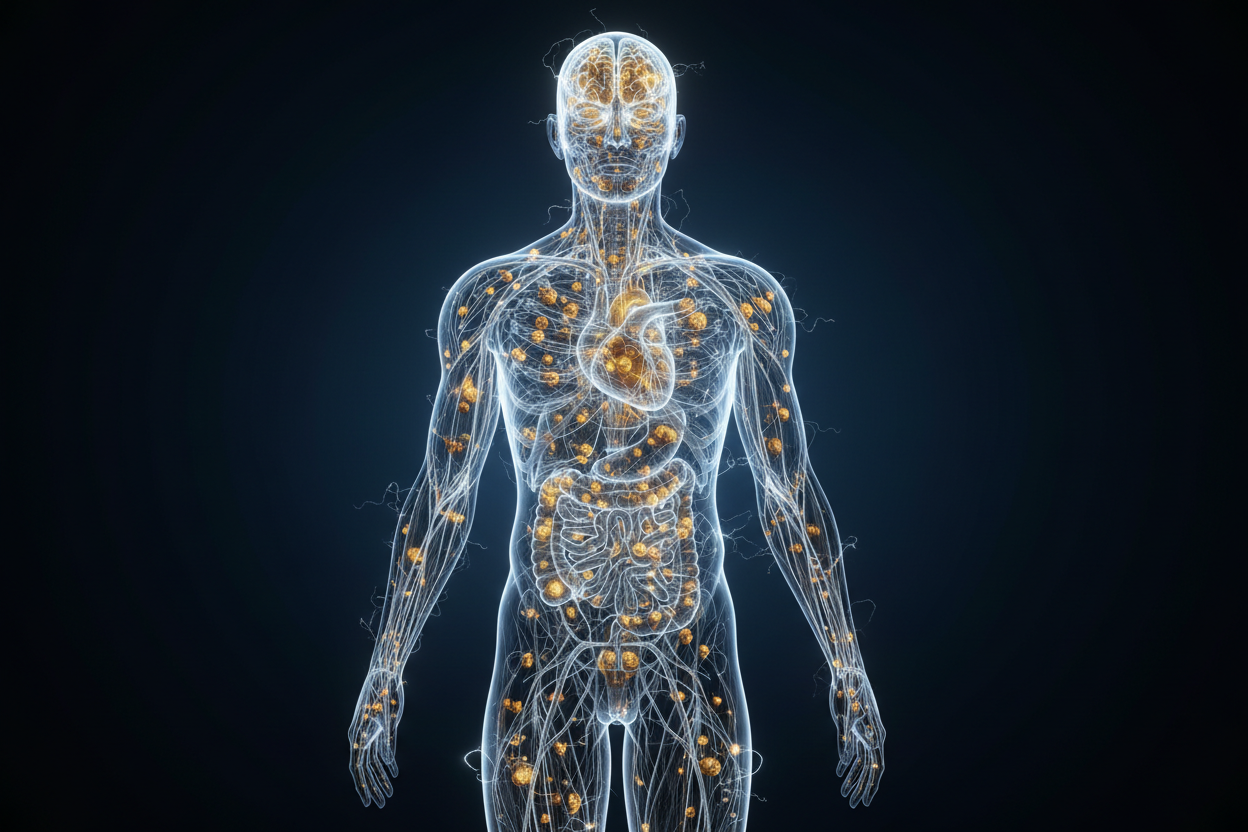
LDL (Low-Density Lipoprotein) is not just a "cholesterol carrier." It is delivery system , which distributes cholesterol from the liver to all body cells. And cholesterol itself is absolutely essential for life:
• Cell membrane constructionCholesterol ensures the flexibility and stability of membranes, especially in the brain, liver, adrenal glands, and gonads.
• Synthesis of steroid hormones: Including cortisol, aldosterone, testosterone, estrogen, and progesterone.
• Vitamin D productionUV radiation converts cholesterol in the skin into vitamin D3 – key for immunity, bones, and overall health.
• Bile Acid SynthesisEssential for the digestion and absorption of fats.
• Protection of the nervous system: The brain contains up to 25% of the body's total cholesterol – without it, not a single synapse could function.
• Development and regeneration: Cholesterol is important during periods of growth, wound healing, and tissue repair.
LDL is therefore an essential deliverer of these vital building blocks It is therefore no surprise that its too low level can be associated with weakened immunity, hormonal imbalance, depression, fatigue, or even an increased risk of neurodegeneration.
HDL, triglycerides, and their ratio – more important than LDL?
Studies show that ratio of triglycerides to HDL (TG/HDL) is a much stronger predictor of cardiovascular risk than LDL cholesterol itself. High triglycerides combined with low HDL indicate insulin resistance, metabolic syndrome, and increased inflammation. On the other hand low triglycerides and high HDL indicate a good metabolic and energetic state of the organism.
From the quantitative data presented in the study by Ravnskov et al., it follows that the majority of the cohorts observed did not work with the TG/HDL ratio, but focused purely on LDL-C . This is a significant oversight. LDL can be elevated even in healthy individuals who have an excellent TG/HDL ratio, healthy glycemia, and low inflammation. In these people there is no reason for intervention – quite the opposite, lowering LDL without considering these parameters can be incorrect.
It is therefore important that cholesterol assessment was not reduced to LDL only , but to take into account a comprehensive picture – including HDL, triglycerides, CRP, oxidized LDL, apolipoproteins, and the ratio of lipid markers.
Quantum biology and the role of cholesterol in the body
From the perspective of classical biochemistry, cholesterol is a component of membranes and a precursor of steroid hormones. But the view of quantum biology goes much further. Cholesterol is key membrane stabilizer, modulates electrical capacitance, affects the viscoelastic properties of cells , and even interacts with photons a electron flow in mitochondria.
Cholesterol acts as a dielectric – a substance that dampens electrostatic discharges in the lipid membrane. Without it, the cell membrane would be too permeable, and signaling systems (including ion channels) would not function. In neuronal and cardiac cells, this could lead to a catastrophic loss of electrical stability.
Quantum biology also shows that cholesterol can influence the flow of excited electrons , so-called excitons, in the transmission of light information in the body. In the retina, brain, and skin, cholesterol plays a crucial role in regulating biophotonic communication – a mechanism that classical medicine has so far remained silent about, but which may be the key to understanding the "intelligent" organization of the living system.
LDL as an Immunological Protector
LDL particles are not just "fat carriers." They contain antioxidants, vitamins (e.g., vitamin E), and – as new research shows – they also have a direct immune function:
• Bind bacterial toxins like lipopolysaccharide (LPS) and neutralize their effect.
• They capture viruses and pathogens , thereby neutralizing them even before they reach the cells.
• It is involved in the transport and metabolism of vitamin K2 and other bioactive molecules .
Studies even show that people with low cholesterol have higher mortality from infections, cancer, and neurodegenerative diseases.
Statins and the question of benefit
While statins demonstrably reduce LDL, their effect on life extension is minimal in healthy people . In some studies, statins have brought only a few extra days of life – and that at the cost of undesirable side effects:
• memory disorders, fatigue, muscle weakness,
• increased risk of diabetes,
• increased incidence of certain types of cancer in long-term users with suppressed LDL.
Add to that the fact that most recommendations for prescribing statins are based on models, where LDL is considered a causal factor , not as an indicator of metabolic imbalance or stress.
Reverse causality and age
Low LDL can be as a result , not the cause. People with low LDL may suffer from hidden illness, malnutrition, cancer, or other conditions that lower cholesterol levels. In older people, this effect is very pronounced – low LDL is often a sign of poor health, not a protective factor.
On the contrary high cholesterol in seniors may help stabilize membranes, protect the nervous system, and improve immune defense.
What to take away from this?
• Cholesterol is not your enemy. It is the basic molecule of life.
• LDL is part of the immune defense , bioelectrical stability, hormonal balance, and metabolism.
• Low LDL in older people can be dangerous – and the effort to reduce it at all costs can be counterproductive.
• Statins are not a universal solution – their benefit is limited and individually variable.
• TG/HDL ratio is often a more reliable risk indicator than LDL alone.
• Let's measure more than just LDL : let's monitor inflammatory markers (CRP, ferritin), glycemia, homocysteine levels, LDL oxidation, apolipoproteins, and lipid ratios.
Conclusion
We are witnessing a fundamental reassessment of one of the pillars of modern medicine. It turns out that cholesterol is not necessarily the cause of diseases, but rather indicator of metabolism, immunity, and cellular health status. Instead of blindly lowering the numbers, we should start thinking about their meaning in a broader bioenergetic and quantum biological context.
Cholesterol is like fire – it can burn, but without it there is no light. And without light, there is no life.

Leave a comment
This site is protected by hCaptcha and the hCaptcha Privacy Policy and Terms of Service apply.